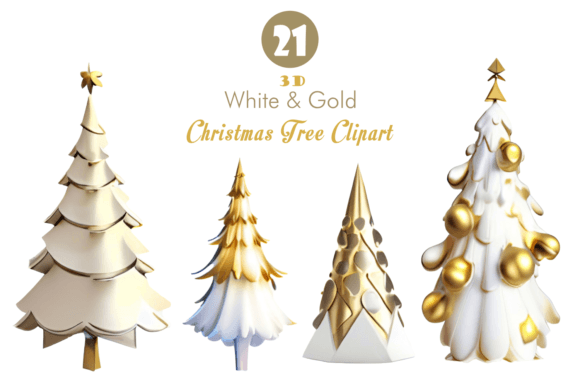
Review: 3D White and Gold Christmas Tree Clipart for Embroidery
As a designer who spends more time staring at stitch simulations than actual holiday decorations, I approach every new machine embroidery design with a mix of curiosity and skepticism. When I first pulled up the 3D White and Gold Christmas Tree Clipart on my screen, my immediate reaction wasn't just about the festive theme; it was about the technical challenge. White and gold is a notoriously difficult color palette to execute in thread, especially when aiming for that "3D" effect without the design getting lost in the fabric. This isn't just a digital illustration; it's a blueprint for a physical object, and the transition from screen to stitch is where most designs fail.
The Visual Personality and Mood
The first thing that strikes me about this Illustrations asset is its elegance. It avoids the cluttered, cartoonish look of many holiday files. Instead, it leans into a sophisticated, boutique aesthetic. The "3D" aspect here likely refers to the layering of elements or the use of specific stitch types to create depth, rather than actual foam padding, though that is an option depending on your machine capabilities. The mood is serene and upscale. It feels less like a child's craft project and more like something you'd find in a high-end home decor catalog. For an Etsy seller or a small shop owner, this visual personality is gold. It signals quality before the customer even touches the handmade product.
Real-World Application: The Holiday Tote Scenario
To truly evaluate this embroidery file, I imagined a specific real-life scenario: creating a limited run of custom tote bags for a local boutique's holiday gift-with-purchase promotion. The goal was to create something reusable that customers would actually want to carry, not hide in a closet. I envisioned stitching the 3D White and Gold Christmas Tree Clipart onto a heavy canvas tote in a deep forest green or a rich navy blue.
In this context, the white threads would pop brilliantly against the dark background, while the gold accents would add that necessary shimmer without being tacky. The layout of the tree suggests it would sit perfectly centered on the bag, acting as a focal point. However, the success of this embroidery project hinges on the stitch density. If the white areas are too sparse, the dark fabric will peek through, ruining the crispness of the tree. If they are too dense, the fabric might pucker, especially on a flexible item like a tote. My assessment is that this design works best on stable, medium-to-heavy weight fabrics where the stitches can lay flat and maintain their structure.
Versatility Across Products
Beyond tote bags, I see this design having a strong life in custom apparel. Imagine it on the left chest of a black or charcoal sweatshirt embroidery project. The contrast would be striking, offering a subtle nod to the season without screaming "holiday party." It would also translate well to baby embroidery, provided the thread count isn't too high for delicate skin. A white onesie with a soft gold and white tree could be a stunning personalized gift for a winter baby shower.
For those running a craft business, the versatility extends to home goods. Think pillow covers made from linen or velvet. The texture of velvet combined with the sheen of gold thread creates a luxurious tactile experience. It could also work as an embroidered patch if digitized with a merrow border, allowing it to be ironed onto denim jackets or beanies. The key is recognizing that this design asset shines when it has room to breathe; it's not a filler pattern but a statement piece.
Technical Considerations and Potential Pitfalls
While the aesthetic potential is high, there are technical minefields to navigate. The combination of white and gold requires careful attention to thread colors. Not all gold threads are created equal; some are too yellow, others too bronze. You need a metallic or variegated thread that complements the stark white without clashing. Furthermore, white thread shows dirt and shadow easily. If this design is used on a kitchen towel or an apron intended for heavy use, the white areas might discolor quickly. It is better suited for decorative items or garments that won't undergo rigorous industrial washing.
Another critical factor is the hoop size. Depending on the complexity of the "3D" details, this design might require a larger hoop to prevent the needle from hitting the frame, especially if you are stitching on curved surfaces like caps. Speaking of caps, stitching white on a structured cap can be tricky due to the curvature. The stabilizer choice becomes paramount here. A cut-away stabilizer is likely necessary to support the weight of the design and prevent distortion over time, whereas a tear-away might leave the edges fraying on a frequently handled item.
Designer Notes for Best Results
Before committing to a production run, I always recommend a few practical steps. First, test the design on scrap fabric that matches your final material exactly. Fabric texture plays a huge role in how the satin stitch and fill stitch areas settle. Second, review the stitch density settings in your software. You may need to manually adjust the pull compensation to ensure the white sections don't gap. Third, create a black and white mockup. This helps you see the value contrast without the distraction of the gold, ensuring the shape of the tree remains recognizable even if the metallic thread fails to catch the light.
It is also vital to check the licensing terms associated with this digital embroidery file. While it is categorized under Illustrations, using it for commercial embroidery projects often requires a specific license different from personal use. Confirm whether you can sell the finished product or if there are restrictions on the number of units. Finally, consider the running stitch outlines. If they are too fine, they might break on stretchy fabrics. Reinforcing these areas or switching to a slightly thicker thread weight could save you from wasted inventory.
Final Verdict on Value and Appeal
Ultimately, the 3D White and Gold Christmas Tree Clipart is a strong contender for designers looking to elevate their holiday offerings. Its strength lies in its ability to convey professionalism and warmth simultaneously. In a market saturated with red and green clichés, this monochromatic yet shimmering approach offers a fresh alternative. It builds customer trust because it looks intentional and high-quality. For the small shop product lineup, it adds a touch of sophistication that can justify a higher price point. However, it demands respect in the execution phase. It is not a "load and go" design for beginners; it requires a thoughtful approach to materials and stabilization. But for the experienced maker willing to tweak and test, the resulting finished product can be a standout star of the season.